
Workforce Operations Platform
Know exactly when, where, and how your team works
Orgix verifies every check-in with GPS, geofencing, and selfie or biometric ID — then turns attendance, field visits, and live team locations into records payroll can trust. No fake punches. No invisible crews. No spreadsheet cleanup.
Built for construction, security, cleaning, healthcare, delivery, and field-service teams — 20 to 500+ employees
The problem
You can't manage time you can't verify.
When check-ins run on paper registers, honor-system apps, or chat messages, payroll pays for hours nobody worked — and managers find out about problems weeks too late.
Buddy punching & fake check-ins
Paper registers and honor-system apps let anyone clock in for anyone, from anywhere — and payroll pays for it every month.
Invisible field teams
Once crews leave the office, managers depend on phone calls and chat threads to know who is actually on site.
Payroll built on bad data
Re-typing hours from registers into spreadsheets inflates payroll and creates disputes nobody can settle with evidence.
Visit reports that never arrive
Field visits get reported late, from memory, or not at all — so coverage and outcomes are guesswork.
Employee records in five places
Directories, documents, and schedules scattered across Excel, email, and paper files — no single source of truth.
Tools that don't talk to each other
Separate apps for attendance, field work, and HR mean duplicate logins, duplicate entry, and gaps between systems.
Industries
Built for teams that work in the field
If your people work across job sites, client locations, patient homes, or delivery routes, Orgix fits how you already operate — from 20 employees to 500 and beyond.
- Construction
- Roofing
- HVAC
- Cleaning
- Security
- Healthcare
- Maintenance
- Delivery
- Telecom
- Field Sales
The solution
Verified time. Visible teams. One platform.
Orgix replaces paper registers, honor-system apps, and chat-thread reporting with verified attendance, live field visibility, and records payroll can trust.
Verified attendance
GPS location, geofenced job sites, and selfie or biometric ID on every check-in — so a clock-in means the person was actually there. Buddy punching stops on day one.
Explore →Live field operations
Crews and reps plan visits, check in on site with GPS, and log outcomes from their phone — while managers watch coverage and visit history in real time instead of chasing chat threads.
Explore →One employee record
Directory, documents, schedules, attendance, leave, and payroll on a single profile — hire to offboard, with no re-typing between systems.
Explore →Customer & sales (CRM)
Leads, customers, and opportunities tied to the same accounts your field team visits — pipeline stages that can't be skipped or rewritten after the fact.
Explore →Built for scale
Role-based access, SSO, webhooks, and identical rules on web and mobile — the same platform at 20 employees and at 500+.
Explore →
Product tour
The screens your managers open every day
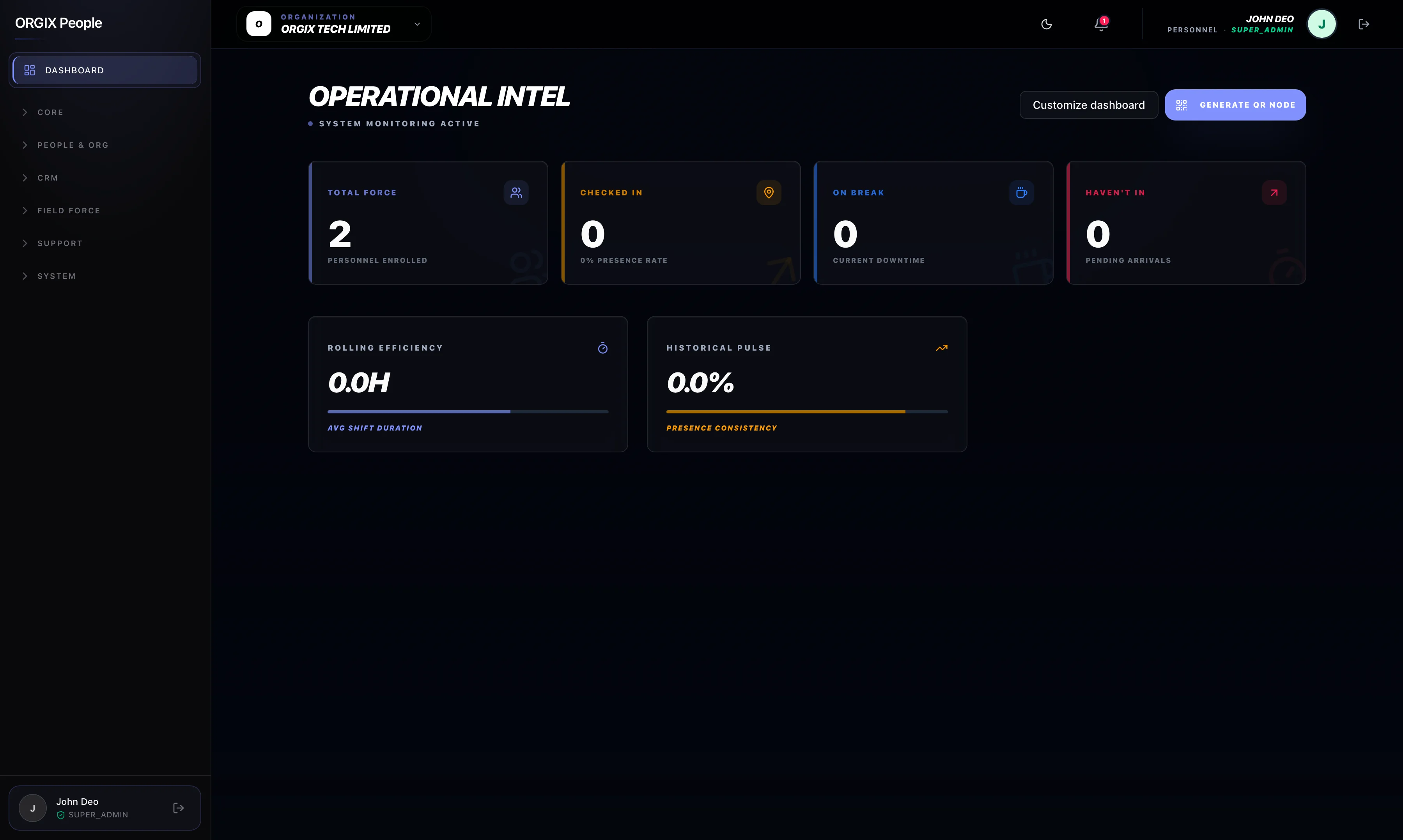
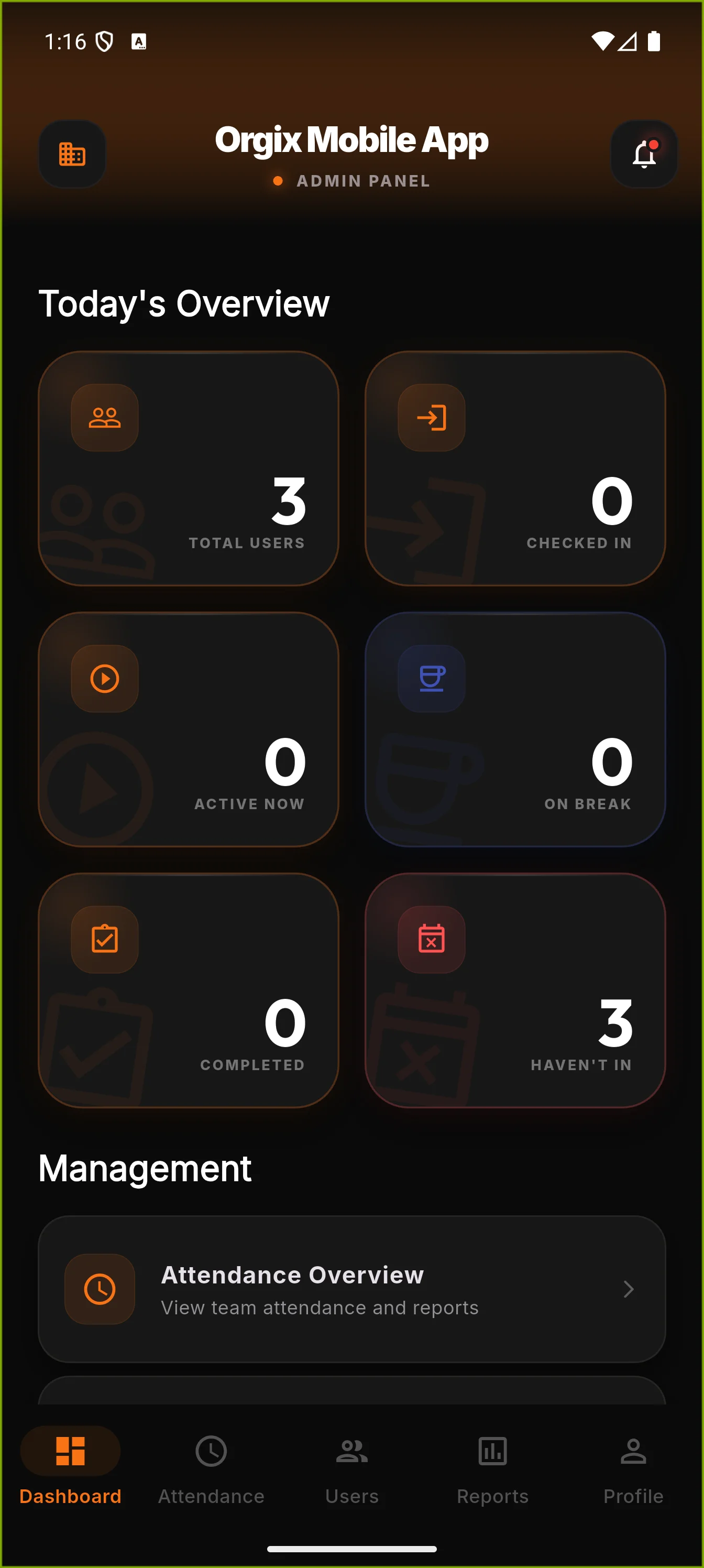
Real screens from Orgix — attendance verification, field operations, people records, and management reports.
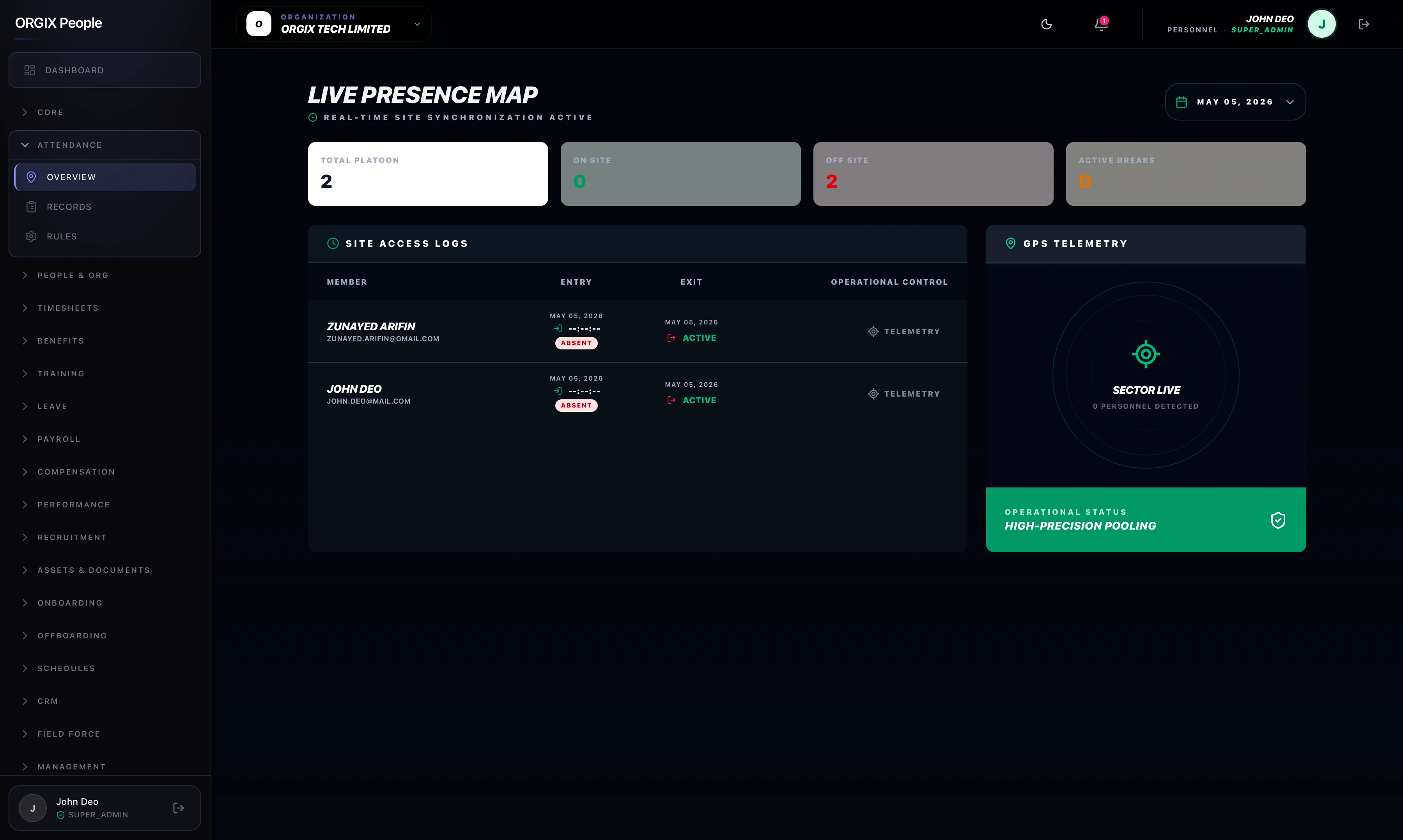
Time & attendance
GPS, QR, selfie, or biometric check-in with rules, sessions, and history.
- Prevent fake check-ins — GPS location plus selfie or biometric ID on every punch
- Attendance rules and geofenced sites flag exceptions for managers automatically
- Verified sessions and history feed payroll and leave — no re-typing
How it works
From rollout to verified data in days
A worker checks in at a geofenced site with GPS and a selfie → Orgix verifies location and identity → exceptions flag for the manager → payroll gets clean, verified hours. Here's how you get there:
Pick the modules you need
Start with attendance and field operations; add HR, payroll, or CRM when you're ready. Your company only sees — and pays for — what you turn on.
Invite your team & assign roles
Invite by email with role assignment in one step. Workers get the mobile app; managers and admins get the web console. Everyone sees exactly what their role allows.
Set attendance rules & geofences
Define job sites, shifts, and how check-ins are verified — GPS, geofence, selfie, or biometric. Rules are enforced on the server, so they can't be bypassed or edited after the fact.
Manage from verified data
Workers check in on mobile; managers see who's on site in real time; payroll and reports are built from verified hours — no re-keying, no disputes without evidence.
Architecture
Built for consistent behavior at scale
Web and mobile apps share one platform layer — each organization's data stays isolated, and every module is gated by subscription and permission.
One login, one record
The same employee and customer data everywhere — no duplicate entry between web and mobile.
Approvals that can't be gamed
No one can quietly edit an approval or pipeline stage after the fact — every change is enforced on the server, not just in the screen you're looking at.
Pay for what your teams use
Turn on HRIS, CRM, Field Force, or the full Suite — people only see the modules your company subscribes to.
Permissions that match how you work
Access rules mirror your org chart and approval chain — consistent whether someone's on web or mobile.
Stop paying for hours nobody worked.
See how Orgix verifies attendance and field work for a team like yours — a 15-minute demo, tailored to your industry.